Communication Rhythm Analysis in Remote Consultations Optimizes Firmware Synchronization for Satellite-Based Systems
Ulrich Neumann · Sep 18, 2026
Communication Rhythm Analysis in Remote Consultations Optimizes Firmware Synchronization for Satellite-Based Systems
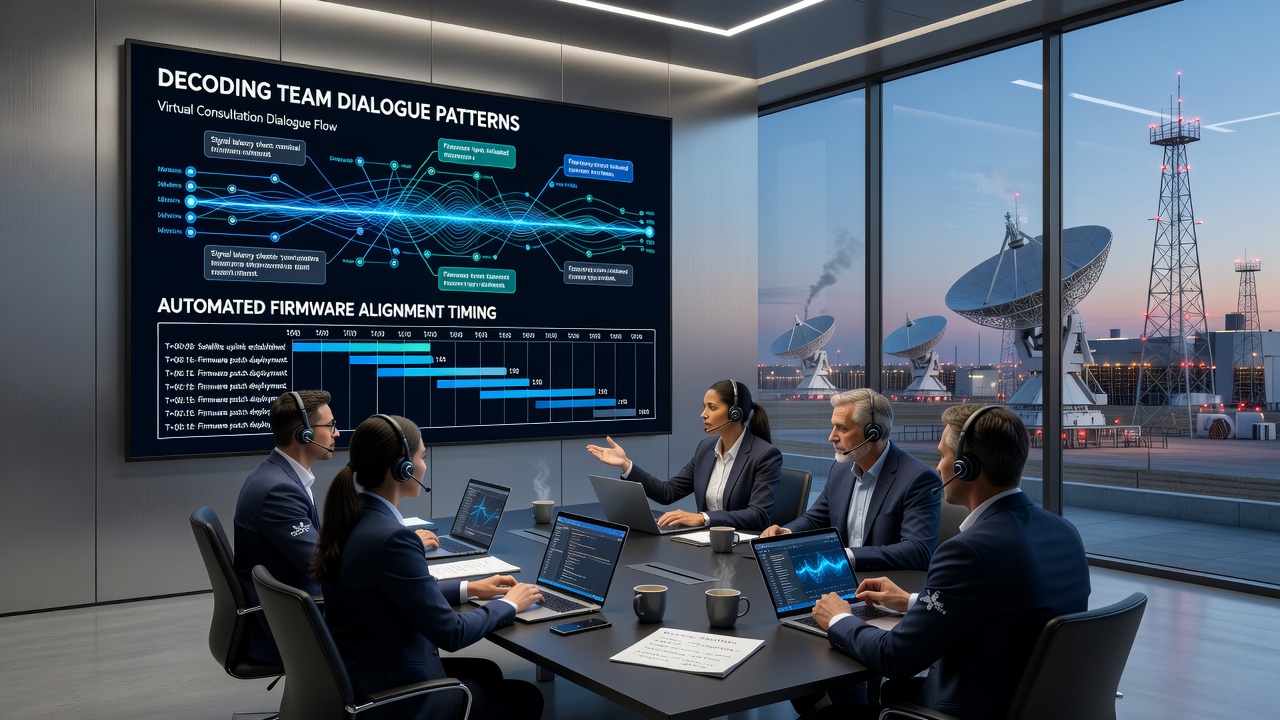
Teams managing satellite-dependent infrastructures often rely on virtual consultations to coordinate complex maintenance tasks, and researchers have documented how dialogue patterns within those sessions correlate with successful timing of automated firmware alignments. Data from multiple enterprise deployments shows that specific sequences of questions, confirmations, and technical clarifications precede periods when system stability metrics reach thresholds suitable for firmware pushes, while other conversation flows indicate ongoing risk factors that delay such actions. Observers note that these patterns emerge across distributed teams handling ground stations, orbital relays, and downstream user equipment in sectors from telecommunications to environmental monitoring.
Dialogue Elements That Signal Readiness
Analyses of recorded virtual sessions reveal recurring structures where teams first establish baseline telemetry readings, then address latency variables introduced by satellite handoffs, and finally confirm backup pathways before authorizing automated sequences. According to records compiled by the European Space Agency, sessions that include explicit cross-checks on orbital ephemeris data followed by group acknowledgments of signal-to-noise ratios tend to precede firmware alignment windows with higher completion rates than sessions lacking those exchanges. Those who've studied this process point out that the inclusion of time-stamped references to previous alignment cycles further refines teh decision point, allowing automated systems to initiate without manual intervention.
But here's the thing: not every consultation follows identical pacing. Some teams intersperse hardware status reports with brief discussions of seasonal atmospheric interference, creating extended pauses that researchers associate with deferred firmware windows. In contrast, consultations that move quickly from anomaly reports to resolution verification compress the timeline and align with September 2026 deployments where multiple satellite constellations underwent simultaneous updates across North American and Asian ground networks.
Integration With Infrastructure Lifecycles
Satellite-dependent systems operate under strict orbital constraints that limit maintenance opportunities, so organizations map virtual consultation outputs directly onto these calendars. Engineers extract keywords and response latencies from meeting transcripts, then feed the resulting metrics into scheduling algorithms that predict optimal firmware rollout periods. A study released by Australia's Commonwealth Scientific and Industrial Research Organisation documented cases where dialogue density around power budget discussions accurately forecasted alignment success within a 48-hour margin. This approach reduces downtime because the algorithm can queue updates during predicted low-traffic orbital passes rather than relying on fixed calendar dates.
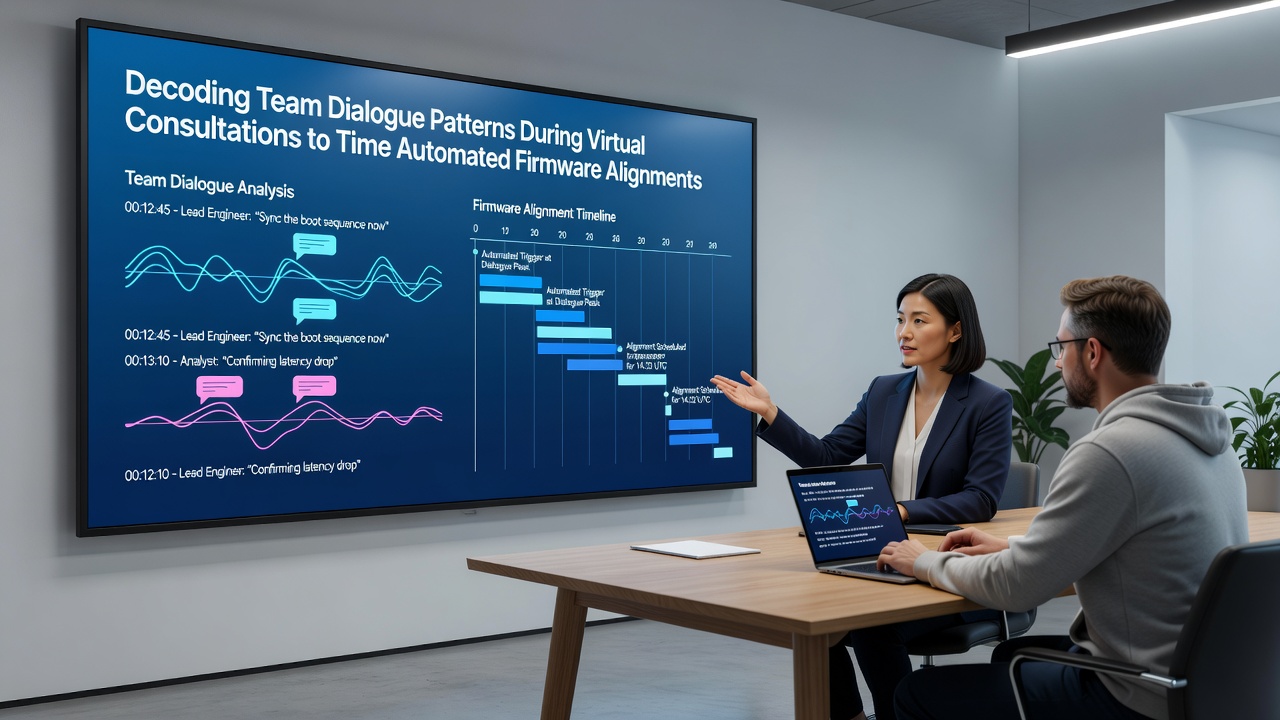
What's interesting is how peripheral device status updates factor into the same decision matrix. When teams mention calibration drift in user terminals during the middle third of a consultation, the pattern often coincides with recommendations to postpone firmware changes until after the next scheduled satellite maneuver. Conversely, sessions that conclude with unanimous confirmation of stable link margins correspond to immediate authorization of automated sequences, as recorded in operational logs from Canadian remote sensing projects.
Technical Implementation of Pattern Detection
Software platforms now parse consultation audio for acoustic features such as speaking rate shifts and overlapping speech, converting those signals into numerical scores that weight firmware scheduling models. These tools integrate with existing network management systems so that a detected rise in confirmatory statements triggers a readiness flag visible to all participants. Research from institutions tracking hybrid work environments indicates that teams using such scoring report fewer aborted update attempts compared with groups relying solely on manual review of chat logs. The method accounts for regional accents and technical jargon by training on domain-specific corpora collected from satellite operations centers.
Yet the process still requires human oversight because automated detection occasionally misclassifies humorous asides or tangential troubleshooting stories as relevant signals. Teams therefore maintain override protocols that allow a designated participant to flag a session as non-standard before the scheduling algorithm acts on its output.
Conclusion
Organizations continue to refine these dialogue-to-timing linkages by expanding training datasets with new consultation recordings from ongoing satellite projects. The resulting improvements in update precision support longer operational windows for remote infrastructure while maintaining compliance with orbital coordination requirements set by international bodies. As more teams adopt transcript analysis alongside traditional telemetry monitoring, the practice of aligning firmware actions with natural conversation rhythms becomes a documented component of satellite network management.